Composite decking has a reputation for shrugging off water, and that’s fair: it doesn’t rot, swell or split the way timber does. So it’s natural to wonder how far you can push it. Could it go on a jetty, a pontoon or a flood-prone site? Here’s the honest answer.
How composite decking handles water
Composite boards are protected by a polymer cap that keeps water out of the core. That’s why they don’t rot, grow fungus or attract termites, and why they’re so popular around pools and on the coast.
- HOME has a wood-plastic composite core sealed inside an HDPE cap.
- ADVANCED has a foamed PVC core with no wood content, inside an ASA cap. With no wood fibre at all, it’s our most water-resistant board.
For everyday wet conditions, both ranges are built to last. Rain, sprinklers, wet towels and pool splash are all normal life for a composite deck.
Can it be submerged?
No. WoodEvo decking isn’t designed for permanent or regular submersion, for example as the walking surface of a floating pontoon, a boat ramp, or steps that sit in the water.
There are a few reasons:
- The deck system needs airflow. Our installation guides require at least 150 mm of clearance over soil, and ventilation keeps the whole deck, including the frame and fixings, in good condition.
- Frames and fixings aren’t built for it. Even if a board copes with water, the timber or steel frame and the clips under it aren’t designed to sit underwater.
- Flooding isn’t covered. Like most building product warranties, ours excludes damage from flooding and other natural events.
A deck that’s occasionally splashed by waves or sits above a waterline is a very different situation from one that’s underwater. If you’re planning a jetty, boardwalk or waterfront deck, talk to our team about your site first.
Pool surrounds: where composite shines
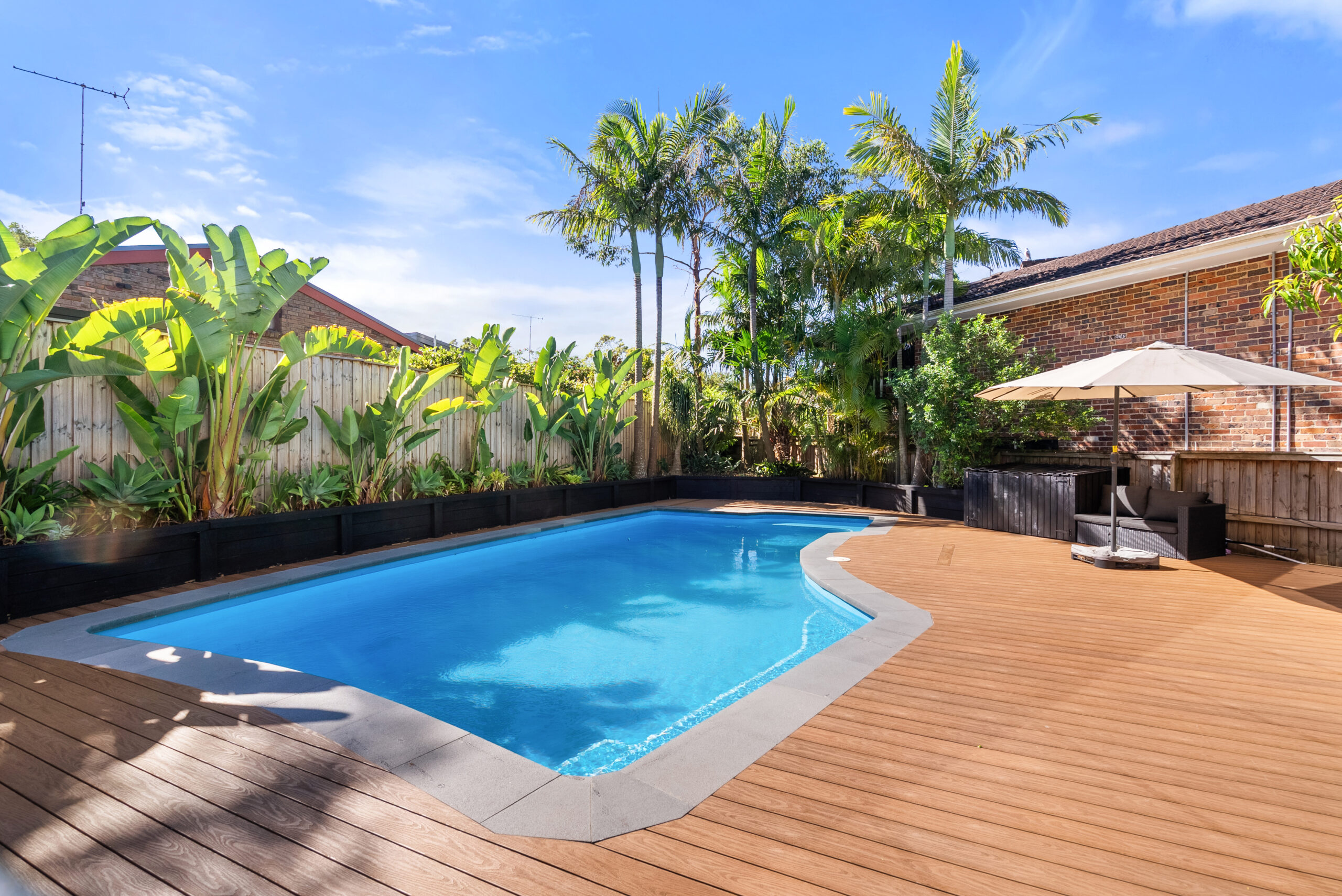
Pools are where composite decking really earns its keep:
- Slip resistance. ADVANCED is rated R13 and P5 under AS 4586, the top classes for both tests. HOME is rated R11.
- No splinters for bare feet.
- Chlorine and salt. The capped surface is easy to rinse clean. Wash off pool chemicals regularly with fresh water and mild soap.
- Cooler colours. Lighter NatureCool™ colours reflect more sunlight and stay cooler underfoot, which makes a real difference around a pool.
Our guide to composite pool decking goes into more detail.
Building near water: what to get right
- Drainage first. Make sure water runs away from under the deck, not into it.
- Keep the clearance: at least 150 mm over soil, or 28 mm over concrete.
- Choose the right frame. In very wet or coastal sites, ask your builder about frame materials and fixings suited to the conditions. Our subframe guide covers the basics.
- Pick ADVANCED for the wettest areas.
- Rinse salt and chlorine off regularly, and don’t let leaves sit wet on the boards.
Frequently asked questions
Is composite decking waterproof?
The boards are highly water resistant. They don’t rot, swell or split like timber. But a deck isn’t a waterproof membrane: water passes between the boards, so the frame and drainage underneath need to be planned for it.
Can composite decking be used for a jetty or pontoon?
WoodEvo decking isn’t designed to be submerged. For jetties and boardwalks above the waterline, talk to our team about your site before you design the deck.
What happens if my composite deck floods?
Floodwater can leave mud and debris on the boards and may affect the frame. Clean the boards with fresh water and mild soap once the water goes down, and have the frame checked. Note that flood damage isn’t covered by warranty.
Which composite decking is best around pools?
ADVANCED. Its foamed PVC core, ASA cap and R13/P5 slip ratings make it our top choice for pool surrounds.
See WoodEvo for yourself
Order free samples, or get matched with an accredited installer near you.