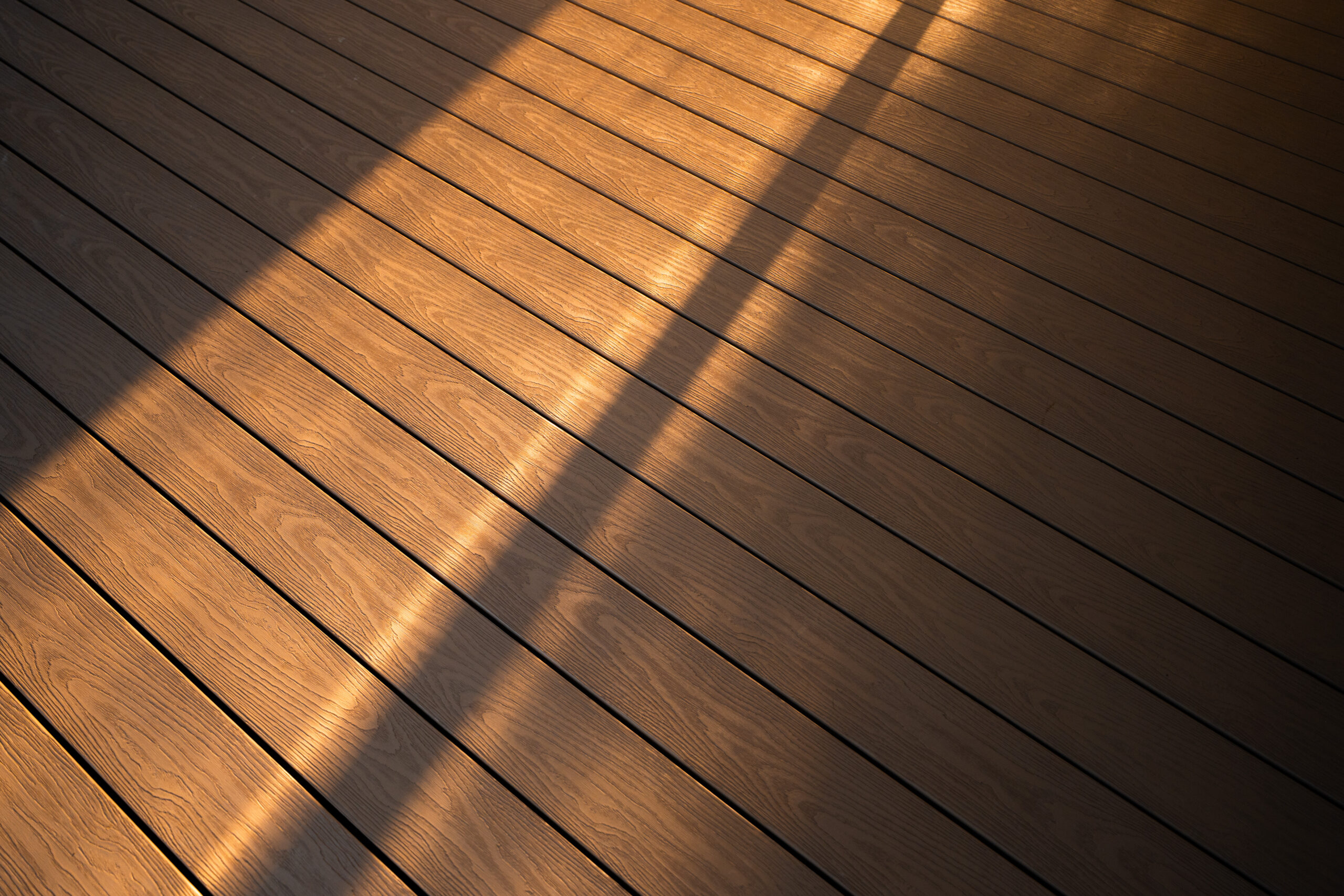
From Perth to Darwin to western Sydney, Australian summers are tough on outdoor surfaces. Timber dries, cracks and greys. Paint and oil break down. And bare feet find out very quickly which surfaces get too hot. If you live somewhere hot, here’s what to know about composite decking before you build.
Does composite decking get hot?
Yes, any solid deck in direct summer sun gets warm, whether it’s timber, composite, stone or tile. What changes is how hot, and that comes down mainly to colour and sun exposure:
- Dark colours absorb more sunlight and can get uncomfortably hot by mid-afternoon.
- Light colours reflect more, staying noticeably cooler.
- Orientation matters. North- and west-facing decks in full afternoon sun get the most heat.
- Shade changes everything. A pergola, shade sail or tree can make a bigger difference than any board.
How NatureCool™ technology helps
Our lighter colours use NatureCool™ technology. Inspired by the way grass stays cool in the sun, it reflects more sunlight rather than absorbing it, so the surface stays cooler than standard boards.
NatureCool™ colours:
- HOME: Basalt, Hampton, Nordic, Tallowwood, Snow White and Vic Ash
- ADVANCED: Antique Silver, Blackbutt, Oak and Sandstone
Even with NatureCool™, boards absorb some heat on very hot days, and darker shades will always feel warmer. For pool areas and barefoot zones, choose a lighter colour and check a sample in full sun first.
UV and colour stability
Australian UV breaks down unprotected materials fast. Raw timber goes silver-grey within a season or two unless it’s oiled. Composite boards are protected by a polymer cap that’s built to resist fading and staining. HOME uses an HDPE cap, and ADVANCED uses an ASA cap, a material known for strong UV and colour stability.
A capped composite deck holds its colour far better than unprotected timber, without any oil or stain.
Heat, expansion and installation
Composite boards expand as they warm up and contract as they cool, mostly along their length. In hot climates, installing the boards correctly matters:
- Install below 30 °C. Boards laid on a scorching day will shrink when temperatures drop.
- Leave the right end gaps. A 5.4 m board needs a 4 mm gap if it’s laid at 15 °C, but only 1 mm at 30 °C. The installation guide has the full table.
- Use breaker boards to break long runs into shorter sections, so the gaps stay even.
- Fix every board properly with a centre clip or screws so expansion happens evenly from the middle.
- Keep the ventilation gap (at least 150 mm over soil) so heat and moisture can escape from under the deck.
Other heat sources to watch
- Reflected sunlight: energy-efficient (low-E) windows can focus sunlight onto a deck and damage the surface. Consider this when choosing where your deck goes.
- BBQs and outdoor kitchens: use a ceramic or fibre cement barrier underneath.
- Fire pits and heaters: never place them directly on composite boards.
HOME or ADVANCED for hot climates?
Both ranges are built for Australian conditions and come in NatureCool™ colours.
- HOME suits most backyards and alfresco areas, with an R11 slip rating and a 25-year residential warranty.
- ADVANCED is the stronger pick around pools and in high-traffic areas, with R13 and P5 slip ratings, an ASA cap and a 30-year residential warranty.
For pool areas specifically, see our guide to composite pool decking.
Keep it cool, keep it clean
Dust and grime on the surface absorb more heat, so a quick wash with soap and water keeps lighter colours performing at their best. Our deck maintenance tips cover the rest.
The best test is your own backyard. Order a free sample kit, leave a light and a dark sample in the afternoon sun, and feel the difference.
Frequently asked questions
Is composite decking too hot for bare feet?
Dark composite boards in full afternoon sun can get uncomfortably hot, as can timber and stone. Lighter colours and NatureCool™ boards stay noticeably cooler, and shade helps most of all.
Which composite decking colour is coolest?
Lighter colours. In our ranges, Snow White, Nordic and Vic Ash (HOME) and Sandstone, Antique Silver and Oak (ADVANCED) are among the coolest, all with NatureCool™ technology.
Does composite decking warp in the heat?
Quality composite doesn’t warp when it’s installed correctly, but it does expand and contract. Correct gaps, breaker boards and installing below 30 °C keep it straight.
Will composite decking fade in the Australian sun?
Capped boards are built to resist fading far better than timber, and they never need oiling or staining to keep their colour.
See WoodEvo for yourself
Order free samples, or get matched with an accredited installer near you.